

The Inner Game and Player Development
Sean Brawley
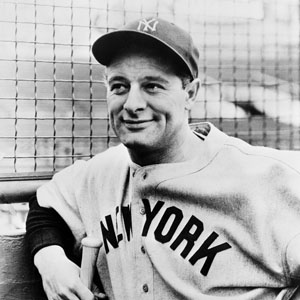
There I was standing on the hallowed ground of the New York Yankee spring training facility in Tampa, Florida. On the surrounding walls were numerous inspirational quotes from the likes of Lou Gehrig, Reggie Jackson, Mickey Mantle, Derek Jeter and others.
Dr. Tom Hanson, the Director of Performance Enhancement, had invited me in to work with the organization's 35 Player Development coaches on how to apply Inner Game of Tennis principles and exercises to their baseball training.
I had never worked in baseball before, and I was admittedly nervous. Dr. Hanson introduced me briefly and then we started. I told the coaches that I wanted them not to think of me as the expert who was going to lecture and teach them, but more as an equal who would facilitate a conversation about developing players and coaching.
It would be an opportunity for our mutual learning. I ended by suggesting that their questions were welcome at any time.
Immediately, a coach raised his hand and asked challengingly, "Mr. Brawley, with all due respect what can you as a former tennis pro and coach teach us about baseball?"
My hand started shaking quite visibly as my nervousness increased so I put it in my pocket so they couldn't see it. I then wondered how to answer the question. I paused in silence and then intuitive inner voice said, "tell them the truth." And so, I did.

"Not much!" I exclaimed. I explained that I hadn't played baseball in 30 years and I didn't have the eye for baseball technique that they did just as they didn't have the eye for tennis technique that I did.
"But let me ask you a question. What is the single most important skill needed to be an extraordinary hitter? Not a good one. Not a great one. But an extraordinary one?"
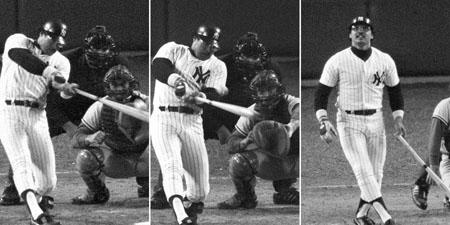
I told them to split up into small groups of three and to discuss it for 5-10 minutes to see what they came up with. Interestingly, the group was unanimous in their answer. "Reading the pitch." They told me that every All-Star or Hall of Fame hitter from Ted Williams to Barry Bonds, Tony Gwynn and their very own Reggie Jackson and Derek Jeter had all said that when they saw the ball well, they hit well.
I suggested that the same was true for tennis. I told them that I had discovered several exercises that really help tennis players read the ball better and I thought they could be applied to baseball. But since I didn't know how they were currently helping the players read the pitch I needed to ask a follow up question.
"How often are you having your players practice reading the pitch?"
Several coaches' jaws dropped open including the one who originally asked the question about what I could teach them. Their answer was "never."
Then a coach spoke up and said that their practices were too jam packed at the moment and they wouldn't be able to fit anything else in to the schedule.
"That's too bad," I said, "that you don't have any space or time for the players to practice the most important thing."
They all laughed and then another coach realized that during pitching practice when they had a hitter stand in to make it more realistic, he typically just chatted up the catcher. He thought they could have the hitter practice reading the pitch instead. All the coaches agreed that that would work, and they could start there.
This is a wonderful example of how a simple inquiry can lead to uncovering an important blind spot, which can then be leveraged for improved learning and performance. I suggested to the coaches that their players also had blind spots and that uncovering them could lead to leaps in performance.

We next went outside for a demonstration of "pitch-hit," a conversion of the highly effective "bounce-hit" exercise from tennis. It had similar effective results with two different batters, so much so that several coaches excitedly insisted on trying it out for themselves.
We explored several more ball awareness exercises and then moved on to discover together another critical skill for hitting, "plate awareness." This had also been overlooked by the coaches and we explored how they might help a player better differentiate where the ball landed in and out of the strike zone.
The coaches concluded that developing greater differentiation of the strike zone would greatly help players discern balls from strikes and also enable them to wait for the optimal pitch to hit.
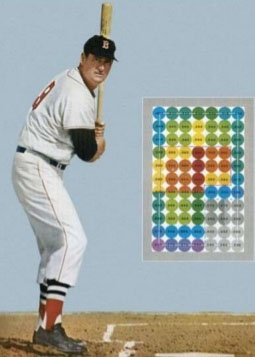
When I got back home, I bought the book The Science of Hitting by Ted Williams to learn more about hitting technique. I opened the book up to a full-page picture of Williams in his batting stance with the strike zone separated into 9 squares. Each square contained his batting average. One of the greats had discovered something important that had helped him become one of baseball's greatest hitters, but few other players or coaches knew about it.
Focusing on what is most important is the foundation for learning, change and long-term development and is more effective than fixing and correcting a player's technique alone. This approach helps players become more self-aware, more capable of learning from their own experience, and more trusting in their own capacity, which can be used on the field to improve hitting and off the field in a player's entire life.
Greater awareness of the ball, the bat, their posture and balance, the strike zone, and where they intend to hit the pitch will generate high quality, highly relevant information and feedback for players and will lead to embodied learning.
Embodied learning integrates thought, feelings, and technique in a capacity for skillful action. It also often leads to a redefined sense of self, which is critical for sustained high performance. Our self-image is our greatest limitation.
Over the following six months, I continued to work with Dr. Hanson to help him incorporate the Inner Game awareness exercises into their daily practice. By the end of the season the Yankee Player Development group's ranking went from #23 out of 32 teams to #1. Then SVP Mark Newman called the results nothing short of extraordinary and they stayed in the top 5 for the next 13 years until his retirement.
Importantly, the coaches reported that they were far more engaged with the players than before, had developed a two-way dialogue with them rather than one-way from coach to player, and were enjoying learning something new.
In the next article, we will look more specifically at how to apply these principles and exercises to tennis.